An aerial image of where Amega St, Mt Gravatt East would be in 1936.
Amega St, Mt Gravatt East in 1951
An aerial image of where we believe Amega St would emerge as well as surrounding streets in that area of Mt Gravatt East in 1951.
Some Numbers regarding Amega Street, Mt Gravatt East
66 properties, 70% are owner occupied. Average owner occupier has been living there for 14 years and 8 months. 50% of residents have lived there for 10+ years.
Some Recent Sales on Amega Street, Mt Gravatt East
34 Amega Street, Mt Gravatt East
sold in July 2024
$1,999,000
Some Older Transactions on Amega Street, Mt Gravatt East
In 1975 59 Amega St, Mt Gravatt East sold for $27,500. In 1975 62 Amega St, Mt Gravatt East sold for $27,000. In 1982 44 Amega St, Mt Gravatt East sold for $38,000.
If you know Amega Street, Mt Gravatt East, well and you have some anecdotes or details to add please email: editor@brisbanesuburbsonlinenews.com.au
Mt Gravatt East Property Market Oct 2024
The median price of a 3-bedroom house in Mt Gravatt East in 2024 was $1,047,000. The median price of a 3-bedroom house in Mt Gravatt East in 2020 was $624,000. TYPICAL INCREASE OF A 3-BEDROOM HOUSE IN MT GRAVATT EAST SINCE 2020: $423,000
The median price of a 4-bedroom house in Mt Gravatt East in 2024 was $1,378,000. The median price of a 4-bedroom house in Mt Gravatt East in 2020 was $752,000. TYPICAL INCREASE OF A 4-BEDROOM HOUSE IN MT GRAVATT EAST SINCE 2020: $626,000.
The median price of a 5-bedroom house in Mt Gravatt East in 2024 was $1.650,000. The median price of a 5-bedroom house in Mt Gravatt East in 2021 was $1,166,000. TYPICAL INCREASE OF A 5-BEDROOM HOUSE IN MT GRAVATT EAST SINCE 2021: $484,000.
The median price of a 2-bedroom unit in Mt Gravatt East in 2024 was $600,000. The median price of a 2-bedroom unit in Mt Gravatt East in 2020 was $365,000. TYPICAL INCREASE OF A 2-BEDROOM UNIT IN MT GRAVATT EAST SINCE 2020: $235,000.
The median price of a 3-bedroom unit in Mt Gravatt East in 2024 was $755,000. The median price of a 3-bedroom unit in Mt Gravatt East in 2020 was $470,000. TYPICAL INCREASE OF A 3-BEDROOM UNIT IN MOUNT GRAVATT EAST SINCE 2020: $285,000.
Westfield members can get a head start on capturing festive memories with early access to online bookings starting now—general bookings for everyone opened on 28 October.
More Inclusive Christmas
Photo Credit: Supplied
Westfield offers a wider range of Santa experiences this year to ensure everyone can join the holiday fun. Sensitive Santa caters to children with sensory sensitivities, while Auslan Santa provides a welcoming environment for Deaf and hard-of-hearing visitors.
Westfield’s popular Pet Photography returns, allowing pet owners to capture cherished moments with their furry companions alongside Santa.
Jacqui Waine, Scentre Group General Manager of Marketing and Community, expressed excitement about the upcoming Christmas season at Westfield. She stated Westfield eagerly welcomes families, friends, and pets to create lasting holiday memories.
The court heard Craig allegedly participated in a violent break-in where a male victim was attacked with a machete, requiring surgery for multiple wounds to his face, cheek, nose, hand, and leg.
Craig, who represented herself, faces charges including burglary with violence, malicious act, going with a face masked, blackened or disguised, deprivation of liberty, robbery in company, and breaching bail.
While not accused of inflicting violence herself, prosecutors allege Craig entered the property with masked co-accused and demanded the female resident reveal drug locations and gather CCTV cameras.
The Crown opposed bail, presenting evidence of prison phone calls where Craig allegedly demanded the victim drop charges. Prosecutors argued she posed a risk of committing further offences and interfering with witnesses.
Justice Michael Copley refused bail, noting concern that Craig, a mother of two, allegedly participated in the incident while already on Supreme Court bail for unrelated matters.
Craig told the court her family risked homelessness due to their lease expiring in February, and she had limited access to rehabilitation services in custody. She described the case against her as “weak,” citing only one witness.
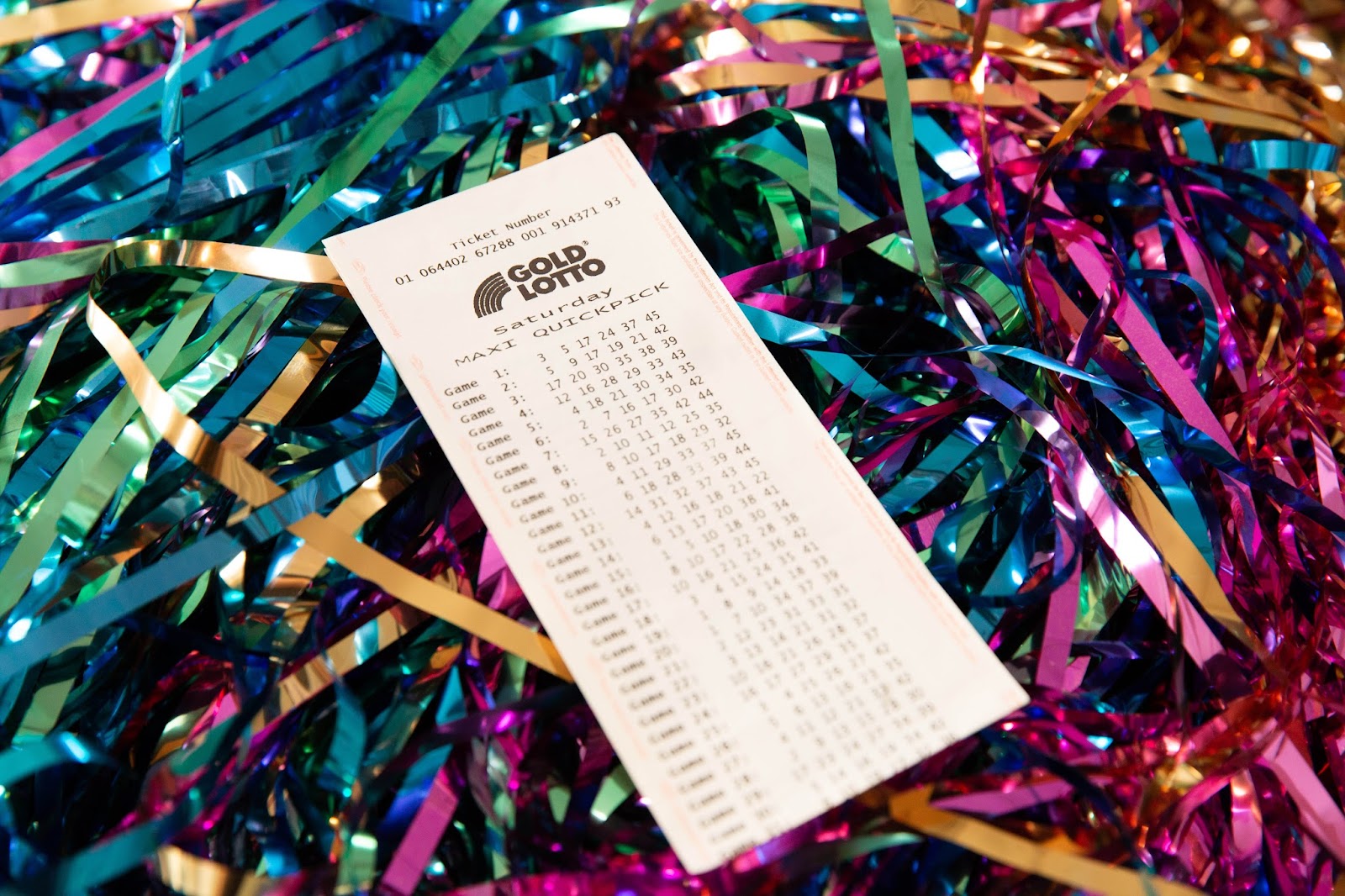
A Mount Gravatt dad couldn’t contain his excitement after a late-night discovery prompted him to wake his sleeping wife with nearly $900,000 worth of surprising news.
“Do I wake her up? Do I tell her?” the retired Brisbane resident recalled wondering as he stared at his screen in disbelief last Saturday night. The decision to rouse his spouse resulted in a memorable midnight moment: “Eventually, I woke her up, and I said to her, ‘I need to tell you something, but you’ve got to sit upright!”
Photo credit: mediacentre.thelott.com
The unexpected windfall of $894,879.56 came from a simple $10 weekly ritual using a combination of birthdates and random numbers he’d been playing for about a year.
The timing couldn’t be better for the Mt Gravatt couple, with the winner’s wife on the cusp of retirement. “I’m retired, and my wife is about to retire, so this will help our retirement fund tremendously,” he said, outlining plans that begin with supporting their children before embarking on home renovations and overseas adventures.
Photo credit: mediacentre.thelott.com
“We’ve got a few house renovations to complete and some overseas travel. We’d love to start off with the Mediterranean countries.
“We’ve travelled a bit in the last few years but there’s still lots to see,” the jubilant winner said, already mapping out future journeys with his newfound financial freedom.
The Queensland winner was one of six major prize recipients across Australia in the Saturday Gold Lotto, drawn 2 November 2024, joining winners from New South Wales, Western Australia, and Victoria in their good fortune. The Mount Gravatt dad purchased his winning ticket digitally through The Lott’s official app.
Queensland’s current Olympic venue plan centres on the Queensland Sport and Athletics Centre, or the QSAC in Nathan, but concerns have emerged over whether the stadium will meet community expectations as the primary athletics venue for the 2032 Brisbane Games.
With just under a decade until the Games, questions are mounting over whether the proposed $1.6 billion upgrade to QSAC will deliver the necessary infrastructure and legacy benefits. Located 12 kilometres south of Brisbane’s central business district, QSAC currently holds 48,500 seats and has served Brisbane’s athletic and sporting events for years. However, some believe its location and current design may not fully align with the community’s vision for a world-class Olympic venue that leaves a lasting impact.
Venue History and Alternative Options
The QSAC upgrade plan emerged after several years of discussing the best venue for Olympic athletics events. Previously, two major alternatives had been considered: a $2.7 billion upgrade to Brisbane’s iconic Gabba stadium or the construction of a new stadium at Victoria Park with an estimated cost of $3.4 billion. Both options were ultimately set aside due to cost concerns and the logistical complexities of construction, with the state deciding to focus on QSAC as a more economical choice. The nearby Suncorp Stadium was selected for the Games’ opening and closing ceremonies.
An independent review earlier this year had also expressed doubts about QSAC as the primary Olympic venue. The review pointed to the opportunity a new stadium could provide for Brisbane, potentially creating a multi-use facility with a higher seating capacity that could serve large-scale events beyond the Olympics. Despite these recommendations, the high costs associated with a new stadium ultimately led the state government to focus on QSAC, which was seen as a viable, lower-cost option.
Broader Collaboration
Recent discussions with federal authorities suggest the possibility of broader collaboration on the final venue decision, following the Mr David Crisafulli’s win in the last polls.
Both federal and state governments have allocated $7.1 billion in funding for the 2032 Olympics, including $2 billion for a new “Brisbane Arena” at the Roma Street precinct, intended to host the Games’ swimming events. This funding agreement has sparked interest in whether federal support could help explore or revisit alternative venues.
In light of community feedback, Mr Crisafulli proposed the formation of an independent infrastructure authority. This body would be tasked with conducting a comprehensive review of all venue options within a 100-day period, allowing for an in-depth assessment of costs, infrastructure needs, and community benefits. The goal is to ensure that any investment aligns with Brisbane’s long-term vision for its sports facilities.
“I didn’t miss the opportunity to raise 80:20 funding,” Mr Crisafulli told the press of his discussion with Prime Minister Anthony Albanese.
Photo Credit: Wikimedia Commons
Community and Legacy Impact
Residents and local sports organisations have shown strong interest in how Olympic venues will impact the community both during and after the Games. Some argue that upgrading QSAC could serve as an opportunity to enhance facilities that are already accessible to the public, particularly those used by schools and community athletics programs. However, others worry that, even with upgrades, QSAC may not provide the same level of economic and social legacy that a new or more central stadium might offer.
Previous reviews of the potential venues highlighted these issues, estimating that keeping the Gabba operational would cost at least $400 million until 2032, with an additional $1 billion needed to keep it compliant with modern codes beyond that year. An upgraded Gabba, or a new Victoria Park stadium, could serve as a more versatile venue, providing additional value for large sporting events, concerts, and community functions.
A koala was found clinging to a road sign in Mt Gravatt, highlighting the growing problem of koala displacement due to habitat destruction in the Brisbane suburb.
The incident occurred in early October, with rescuers responding to the koala’s precarious situation near a major road and industrial estate. Habitat destruction, caused by urban development and the removal of trees, is forcing koalas out of their natural environments, putting them in danger as they wander through suburban areas.
John Knights, a local wildlife rescuer, described how urban sprawl in areas like Mt Gravatt is creating a “reverse domino effect.” As homes are built and backyards are cleared, the trees that koalas and other species rely on for survival are disappearing. This leads to more koalas becoming displaced, wandering into urban spaces where they face risks from traffic and human activity.
Suburban Development and Koala Displacement
The problem is exacerbated by suburban developments where large backyards that once housed trees are being bulldozed for new housing projects. Knights emphasised that every time a tree is cut down, koalas lose another piece of their already fragmented habitat. The result is that koalas, often described as “urban” by locals, are not adapting to city life but are instead lost and frightened.
Koalas are seen as an indicator of a healthy ecosystem, and their displacement signifies larger issues for the entire environment, from birds and possums to the insects and microbes that thrive beneath the trees. According to wildlife advocates, if koalas can no longer find sufficient habitat, other species will also suffer.
Growing Threats and Inadequate Protections
The crisis has intensified as development continues unchecked, with local laws proving ineffective in safeguarding endangered species. Habitat destruction continues despite government claims of “the strongest koala protections,” with loopholes allowing tree removal in areas critical for wildlife.
Queensland is also under scrutiny for building major infrastructure, such as the Coomera Connector freeway, through koala habitats. This has led to fears that urban koalas in places like the Gold Coast may face extinction.
Local wildlife organisations, such as Save the Koalas and Wallabies of White’s Hill, have urged the public to take action by planting native trees and pushing local representatives to strengthen koala protection laws. They highlight that preserving mature trees and increasing awareness are critical steps in addressing the problem.
The group also encouraged residents to report any koalas in danger, pointing out that immediate action can save lives. Community members are encouraged to be vigilant, particularly as more koalas are expected to be displaced during spring, when they search for mates or new territory.
In the meantime, as more trees are removed, the outlook for koalas in areas like Mt Gravatt remains dire, with more frequent rescues needed to save these iconic animals from harm.
Mt Gravatt State School, the heart of the local community for 150 years, will celebrate its rich history, recognising its role as a cornerstone of education and development in Brisbane’s south.
The event will take place on 2 November 2024 at 10:00 a.m. to 2:00 p.m. Past students, current students and their families are expected to join the activities.
From a Slab Hut to a Thriving School
In 1874, the residents of Mt Gravatt, a farming district in Brisbane’s early days, decided their children needed formal education. They built the first school—a humble slab hut with a dirt floor—on land donated by Charles James, with local farmers pitching in to make it happen. It wasn’t much, but it was enough to spark the beginnings of what would become one of Queensland’s longest-standing schools.
Photo Credit: Supplied
Back then, Mt Gravatt wasn’t much more than sprawling farmland, with cattle, vineyards, and a few timber homes dotting the landscape. The community was a melting pot of German, Chinese, Afghan, and European settlers, each contributing to the development of the area. Despite its agricultural focus, these families knew the value of education and worked tirelessly to establish this school.
Samuel Thomas Jackson: The Formidable Headmaster
For nearly 30 years, Samuel Thomas Jackson held the reins of Mt Gravatt State School. Arriving in 1887, Jackson quickly earned a reputation as a stern, no-nonsense headmaster. But while his approach may have been strict, his dedication was undeniable. He guided the school’s transition from a Provisional School to a fully funded State School by 1894. Under his watch, the school grew in size and its role within the community.
Photo Credit: Supplied
Jackson’s untimely death in 1916—drowning while swimming at Currumbin Beach—shocked the school and the community. His legacy as a “fearsome headmaster of the old type” remains etched into the fabric of Mt Gravatt’s history. He lived in the teacher’s residence, converted from the original classroom, and was one of the first to experience the school’s growing needs as Mt Gravatt’s population began to swell after World War I.
Photo Credit: Supplied
A Growing Community, A Growing School
As Mt Gravatt evolved, so did the school. By the 1930s, the farming community had given way to more settlers, and the school needed to expand. With three new classrooms and a headmaster’s office added in 1930, the school was now a bustling hub for local children. The small classroom setup from the early 1900s—a simple arrangement of wooden benches and a chalkboard—transformed to accommodate a more formal educational environment.
The school’s early days, with crowded classrooms, strict discipline, and an emphasis on the basics, were a stark contrast to the school of today. But those humble beginnings forged a strong connection between the school and the community, one that remains a source of pride for many.
The Pie Man: A Delicious Memory of the 1940s
One of the more delightful chapters in the school’s history comes from the 1940s when the “Pie Man” became a weekly highlight for students. Every Friday, he would roll up to the school with his pie van, much to the excitement of the children.
Lining up eagerly, the students would clutch their pennies, waiting for their turn to grab a hot pie. It was a simple joy that has become a treasured memory for many of Mt Gravatt’s former students. Today, that story is a nostalgic reminder of the school’s role not just in education, but in creating lifelong memories for its students.
Photo Credit: Supplied
A Community Stronger Together
Throughout its history, Mt Gravatt State School has been more than just a place of learning. It has reflected the growth and change in the area, evolving from a rural farming outpost to a thriving suburban centre. The school’s close relationship with its community has allowed it to thrive for 150 years.
The anniversary celebration will undoubtedly bring together generations of former students, teachers, and community members who have all played a role in the school’s long-standing success. From the days of the slab hut to modern classrooms, Mt Gravatt State School has remained a steady presence in the lives of countless Brisbane families, and it shows no signs of slowing down.
Mt Gravatt residents can now access Brisbane Metro, the city’s newest public transport service, with its Route 169 officially launching this Monday, October 21.
The new service connects Eight Mile Plains to UQ Lakes, offering local commuters a modern transport solution with stops at key destinations including Upper Mt Gravatt and Griffith University.
Your New Route from Upper Mt Gravatt
Brisbane Metro map (Photo credit: brisbane.qld.gov.au)
The service begins at Eight Mile Plains, making Upper Mt Gravatt station one of the first stops on the route. This strategic position gives Mt Gravatt commuters early access to the Metro, meaning better chances of securing seating during peak hours. The journey continues through Griffith University before heading to five more stations.
Photo credit: brisbane.qld.gov.au
The new Brisbane Metro vehicles serving Upper Mt Gravatt station are a significant upgrade from traditional buses. At 24.4 metres long – double the length of standard city buses – these HESS vehicles can accommodate up to 150 passengers, with capacity to increase to 170 during special events. This means less crowding during peak hours and a more comfortable journey for Mt Gravatt residents.
Nothing changes with your ticketing – simply use your go card to tap on and off at Upper Mt Gravatt station as usual. The familiar Translink ticketing system ensures a seamless transition to the new Metro service.
Modern Features for Your Journey
Photo credit: brisbane.qld.gov.au
Your commute from Upper Mt Gravatt now comes with modern conveniences designed for today’s travellers. Free Wi-Fi keeps you connected throughout your journey, while USB charging points let you power up your devices on the go. Clear audio announcements and digital displays ensure you never miss your stop.
The Brisbane Metro service features a low-floor design for easy boarding. The front compartment houses three mobility bays, with an automatic ramp available at the first door. Priority seating is positioned near all three door entrances, and help points are readily available throughout the vehicle. For those requiring assistance, both automatic and manual ramps can be accessed through help phones either on board or at the station.
Photo credit: brisbane.qld.gov.au
Your travel from Upper Mt Gravatt is secured with comprehensive CCTV coverage throughout the vehicle. The separated driver cabin and six emergency help points provide additional safety measures, while well-lit compartments ensure visibility throughout your journey.
With three sets of doors and all-door boarding, getting on and off at Upper Mt Gravatt station is quicker and more efficient. This means less time waiting at the station and faster journey times, particularly during peak hours.
The Route 169 service through Upper Mt Gravatt is the first step in Brisbane Metro’s rollout, with the full M1 and M2 services set to commence in coming months. This early launch gives Mt Gravatt residents a chance to experience the new service ahead of the wider network expansion.
While Route 169 is just the beginning, it represents a significant upgrade for Mt Gravatt’s public transport options. The service provides a direct link to key destinations including Griffith University and UQ Lakes, with more connections to come as the full Metro network rolls out in the coming months.
Beryl Exley, Professor at Griffith University has been honoured as one of Queensland’s most influential teachers at the prestigious Queensland College of Teachers 2024 TeachX awards.
Professor Exley received the Excellence in Teacher Education award, recognising her significant impact on shaping the next generation of educators.
With a career spanning over three decades, her journey in education began in 1987. She dedicated her first 12 years to teaching in both state and independent schools, where her passion for literacy education flourished. This passion led her to pursue higher education, completing a Master of Education Honours and a PhD.
Photo credit: qct.edu.au
Professor Exley’s commitment to advancing education extended beyond the classroom. She spent 17 years at the Queensland University of Technology and seven years at Griffith University, where she has been instrumental in developing Initial Teacher Education (ITE) programs. Her expertise and dedication have not gone unnoticed, as evidenced by her securing over $2.25 million in research funding throughout her career.
A prolific researcher, Professor Exley has published more than 100 research articles and reports focusing on literacy education and working with preservice teachers in ITE programs. Her influence in the field is further exemplified by her past role as the National President of the Australian Literacy Educators’ Association, where she continues to be a respected life member.
Photo credit: Griffith University
Professor Exley’s adaptability and leadership were particularly evident during the COVID-19 pandemic. When professional experience placements were disrupted in 2020, she collaborated with other universities and the Department of Education to implement an innovative online professional experience program for soon-to-be graduating preservice teachers. This initiative not only allowed students to graduate on time but also equipped them with valuable skills for the evolving educational landscape.
From 2018 to 2022, she held the position of Deputy Head of School of Education and Professional Studies at Griffith University, overseeing the academic and teaching and learning portfolio. Her leadership in this role further solidified her reputation as a driving force in educational innovation and excellence.
2024 TeachX Awards
Photo credit: Queensland College of Teachers
Professor Exley’s recognition at the TeachX awards, where she was selected from 349 nominations and 80 shortlisted candidates, underscores the significant impact she has had on education in Queensland.
As one of the 31 teachers honoured this year, her award celebrates not only her individual achievements but also her outstanding contributions to the school community and the teaching profession as a whole.
Through her tireless efforts in research, teacher education, and leadership, Professor Beryl Exley continues to shape the future of education in Queensland and beyond, inspiring both current and future generations of educators.
Festival organiser Sandra Beynon is contesting a $774 fine issued by the Office of Liquor and Gaming Regulation (OLGR) following a year-long investigation into the Jazz Blues and Koala festival held at Griffith University, Nathan in October 2023.
The free festival, organised by Beynon’s company under a community liquor permit, designated the Queensland Koala Crusaders as the beneficiary of all bar profits. However, the OLGR’s investigation, which included obtaining four warrants and extensive financial searches, alleges discrepancies in reported amounts for liquor sales and mishandling of raffle money donations.
Beynon strongly denies any wrongdoing, attributing the issues to clerical and technological errors involving amounts less than $200. She claims to have incurred a loss of $179 from the event.
The investigation’s findings suggest that total net sales were higher than initially reported by Beynon. Documents from financial services company Square reportedly showed net sales takings of $1048.71, after administrative fees.
Beynon argues that she was never given the opportunity to rectify any issues before being fined. She plans to challenge the fine at the Queensland Civil and Administrative Tribunal, following the denial of her formal request to waive the penalty on September 20.
Brisbane City councillor Steve Griffiths, who awarded a $5000 grant to the festival, stated that the grant did not cover bar expenses and that all event-based costs were correctly accounted for.
The case raises questions about the regulation of community events and the challenges faced by organisers in complying with liquor licensing requirements. As the situation unfolds, it highlights the importance of clear financial reporting and communication between event organisers, beneficiaries, and regulatory bodies.